Negative testing checks how your software handles invalid, unexpected, or out-of-range inputs. This guide explains why it matters, how to run it step by step, and which scenarios you should always cover – from empty fields and wrong data types to boundary values and unauthorized access attempts.
Have you ever heard of positive and negative testing? These are some of the basic QA concepts, so we can’t help but talk about them.
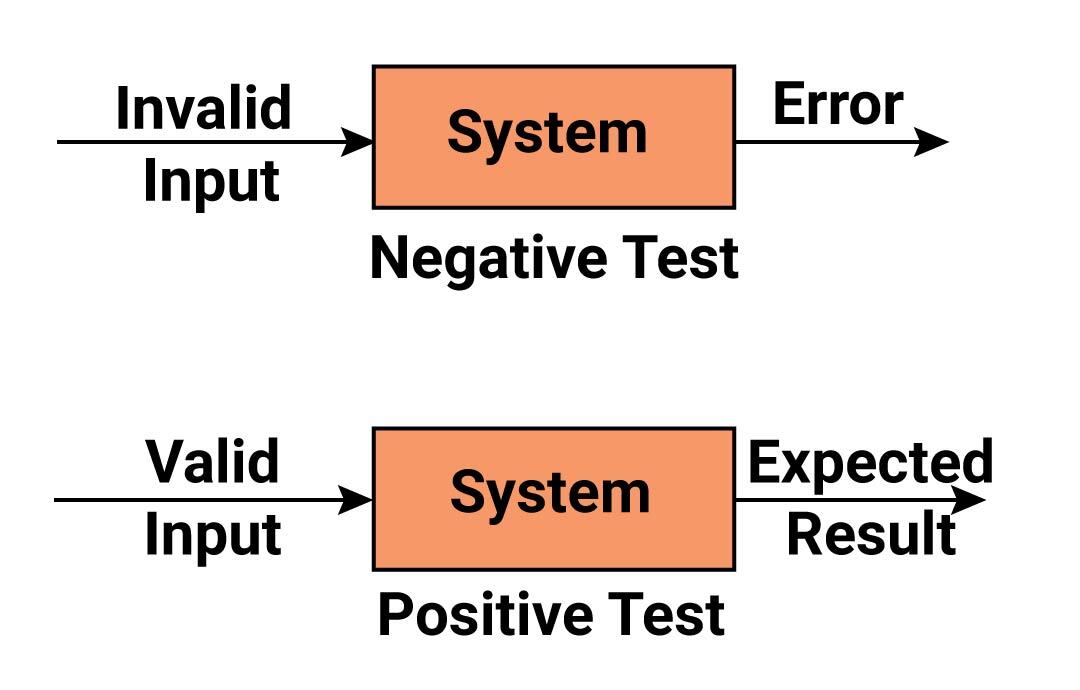
When a QA specialist performs a positive test, they check if software works as intended. A negative test, in turn, evaluates what happens if someone uses a nontypical, unexpected input. Will software be able to respond correctly? And what does “correctly” mean under such circumstances? That’s what we’ll try to explain in this article.
In a nutshell, negative testing ensures that your application can handle invalid input and unexpected user behavior. To be more specific, it verifies that the system can handle invalid inputs responding with error messages and not allowing the software to perform in a certain way.
Let’s take a close look at the negative testing by comparing it to the positive. Let’s take an ordinary elevator in the QA Madness’ office as an example and examine how it works.
Negative testing will answer the following questions:
Meanwhile, we work with normal conditions for running positive tests:
To write a negative test case, select invalid input data or unwanted user behavior that would be useful to check. Indicate the expected result for this unexpected action. As a rule, it will be “failed.”
In our blog, you can find a guide for creating test cases, positive and negative ones. Read and refresh your memory. Generally, the logic of writing positive and negative test scenarios is similar. Just remember that negative testing intends to identify possible program failures under any circumstances.
ID: TC-1.1
Summary: Check the registration with empty required fields.
Steps to reproduce:
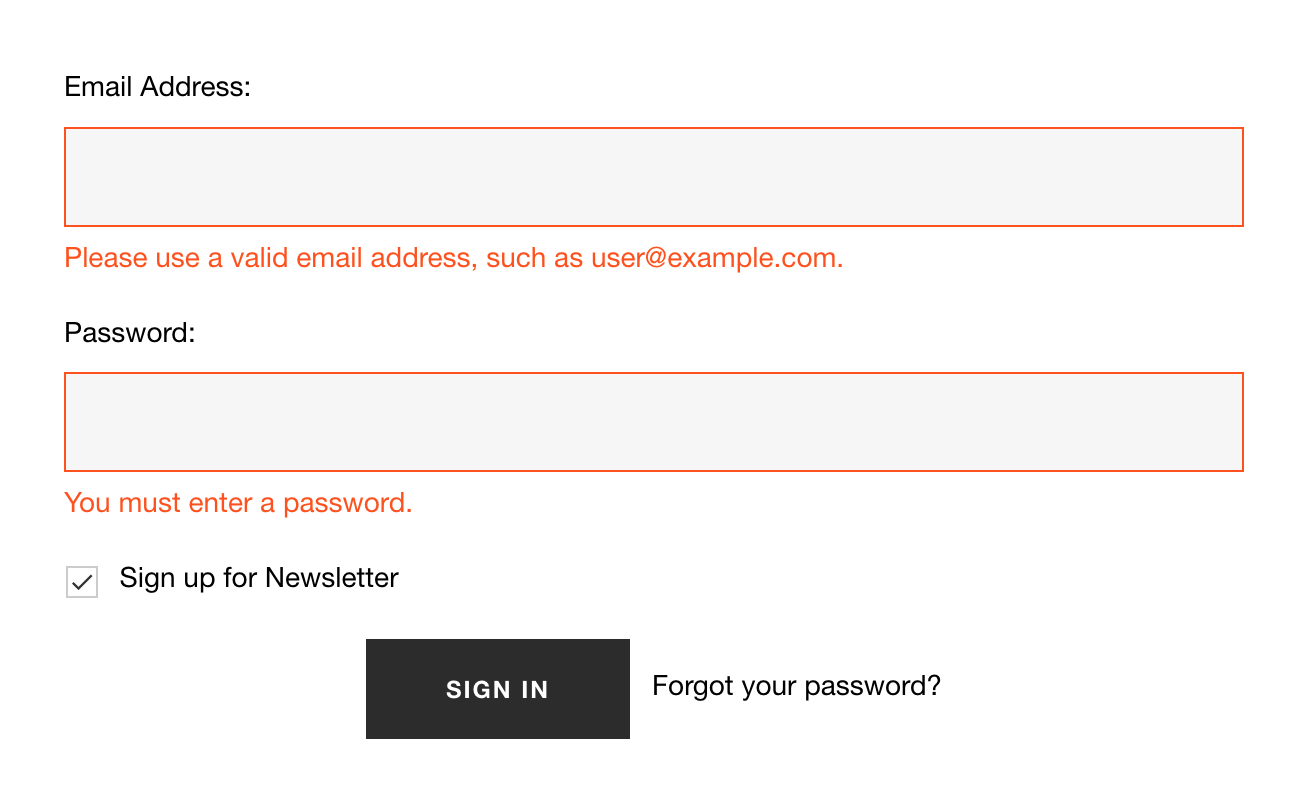
Expected result: A user cannot register. The error message is displayed.
* The QA Madness team hasn’t tested this website, the link and screenshot are for illustrative purposes only.
The purpose of negative testing is to detect potential errors and application crashes in different situations. You can find several examples of such situations below:
Since all of the QA processes are time-consuming, the decision of “what,” “how,” and “how much” to test is highly important. We can’t create a perfect bug-free system. However, we can make sure we’ve done everything to prevent those bugs. To achieve that, it’s necessary to run negative testing.
Let’s talk in more detail:
☑ Even a Junior QA specialist with little experience should know how to run negative testing. With time and new projects, you’ll boost your skills and expertise.
☑ Usually, there are a lot more negative than positive testing scenarios. However, we don’t recommend forgetting about the latter either 🙂
☑ Well-written negative cases are what a client expects from a QA specialist in the first place. Oftentimes, customers already know how to do a basic checkup with positive cases.
Negative testing is a crucial part of software testing that can be costly and time-consuming. Negative test cases have their pros and cons, so it’s worth remembering when, where, and how to apply them. Therefore, the best advice we can give is to learn theory and practice.
Positive testing checks that software works correctly under expected conditions. Negative testing checks how software responds to invalid inputs, unexpected user behavior, or edge cases – verifying that the system handles errors gracefully without crashing.
Negative testing should be part of every testing cycle. It is especially important for input fields, forms, authentication flows, and any feature that accepts user data. There are typically more negative scenarios than positive ones, so plan accordingly.
Common scenarios include: submitting forms with empty required fields, entering data that does not match the expected type or format, providing values outside the allowed range, exceeding character limits, and attempting to access pages without logging in.
The expected result in a negative test case is typically an error message, a blocked action, or a validation warning. The system should not crash or allow the invalid operation to proceed.
Yes. Even junior QA specialists should know how to write and run negative test cases. The logic is similar to positive testing – you define the input, the steps, and the expected result. With experience, you will learn to identify more edge cases and cover them effectively.
The knowledge of a programming language can help a QA specialist in different ways. Besides…
The goal of quality assurance is to guarantee that the software works well. The “well”…
Testing is a critical phase of the software development life cycle (SDLC). It is the…
A bug life cycle in software testing is a set of statuses designed to coordinate…
In 2026, software architecture is no longer just multi-layered; it is highly distributed and deeply…
If you check the comments in a review of a mobile app, you often can…